

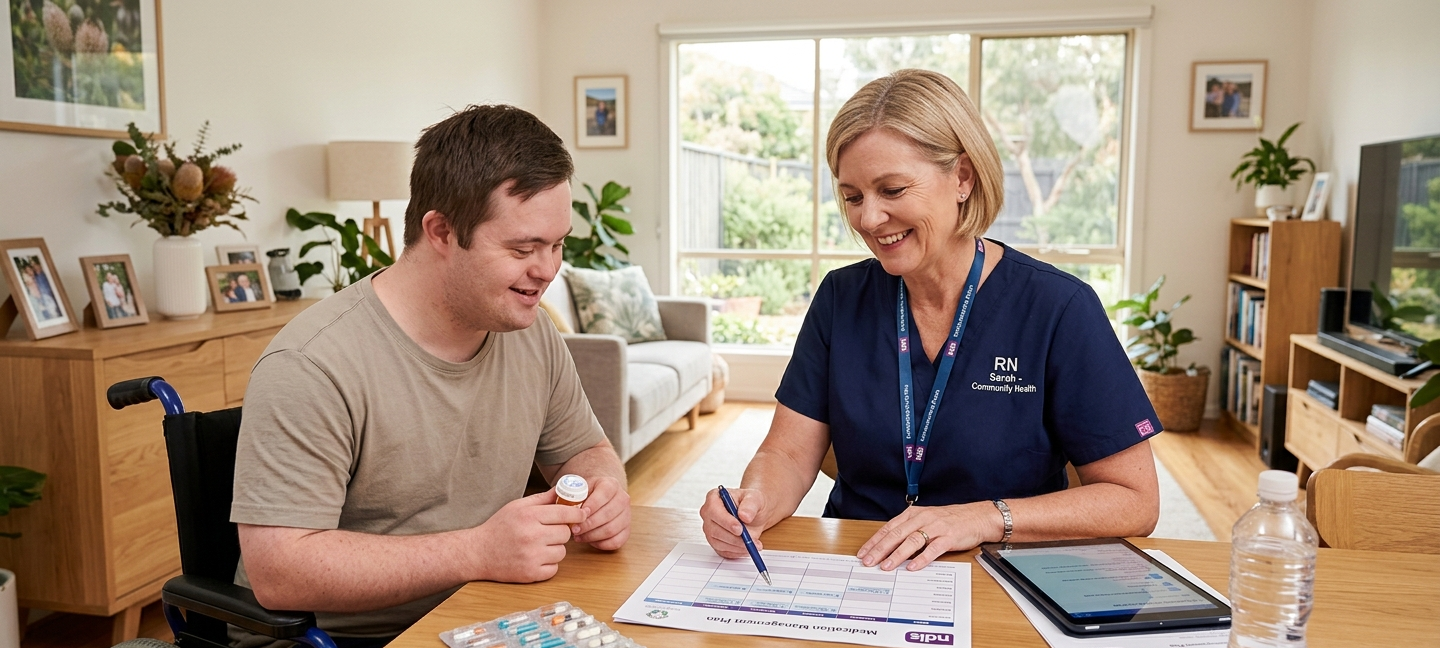
Taking multiple medications is not just about popping the pills. It’s a serious job. A job that can lead to a visit to the hospital if it goes wrong. First, NDIS medication management registered nurses ensure safety by being trained to identify risks before they escalate into emergencies.
A registered nurse (rn) by your side makes all the difference. Especially when life gets busy, or health needs get complex. They don’t just give you a tablet. They know how that tablet will affect your body, your food, and your other treatments. In this article, I will guide you to know more about why RNs are vital for NDIS medication management. So let’s start questioning about-
What exactly is medication management?
Medication management is about monitoring a person’s medication. It ensures its safe, effective, and correct use. This is often a complex care plan for individuals with high needs. It could be injections, PEG feeding, or handling strong mental health meds. In short, it’s about keeping the participants healthy and out of harm’s way.
Why Registered Nurses (RNs) are the Gold Standard
You may ask yourself, Can’t someone help with meds? Support workers are good, while a registered nurse or a nurse associate adds years of medical training. Moreover, An rn notice with the spidey-sense if a participant is becoming drowsy, dehydrated, or showing signs of a bad reaction.
The rn nurse is usually the link between the GP and the participant in in-home nursing care. They ensure the NDIS medication management plan is more than a plan on paper. It’s a living, breathing safety net.
Alt-text: A registered nurse performing NDIS medication management for a participant at home.
How RNs Manage NDIS Medication Management in Complex Care
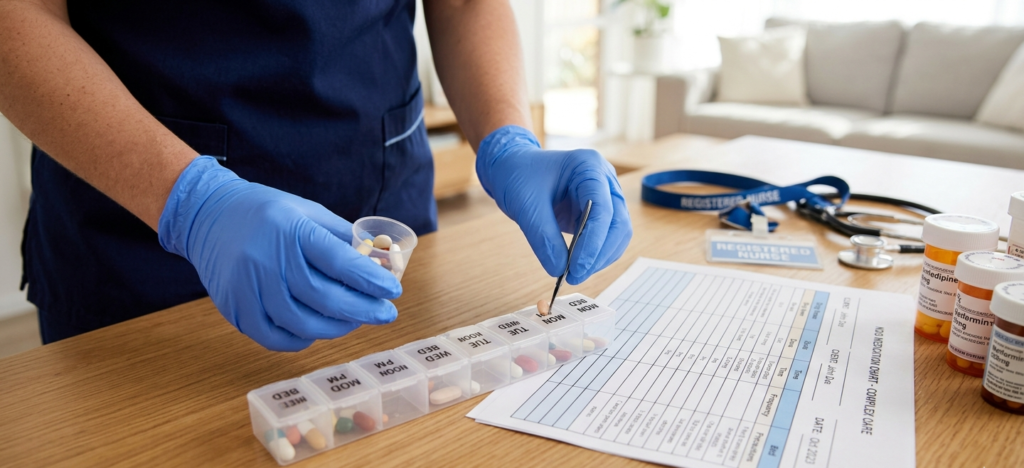
In complex care plans, the chances of health risks are quite high. Because when someone has complex needs. He can go through multiple health needs that overlap. In these positions, registered nurses stay organized:
- Meds Review: They check every medication for clashes (drug interactions).
- Clear Documentation: Using an NDIS Medication Chart template, they track every dose.
- Training Others: They educate families and support workers about side effects.
- Assessment: A registered nurse assistant or RN will check vital signs to see if the medicine is actually working.
If you or a family member needs expert tips for these steps. To start with, a good choice is to check out the NDIS community nursing care.
Understanding Complex Care: A Real-Life Perspective
Suppose someone has diabetes and is severely physically disabled. May require insulin, antihypertensive medications, and pain medication. This is a complex care patient.
I’ve seen situations where a change in diet resulted in a dangerous dose of insulin. A travel rn or local rn visiting the home was able to detect the low blood sugar early. If it wasn’t for that clinical eye, it could have been an ER visit. This is the real meaning of in-home nursing care.
Safety Standards in NDIS Nursing
| Safety Feature | How the RN Handles It |
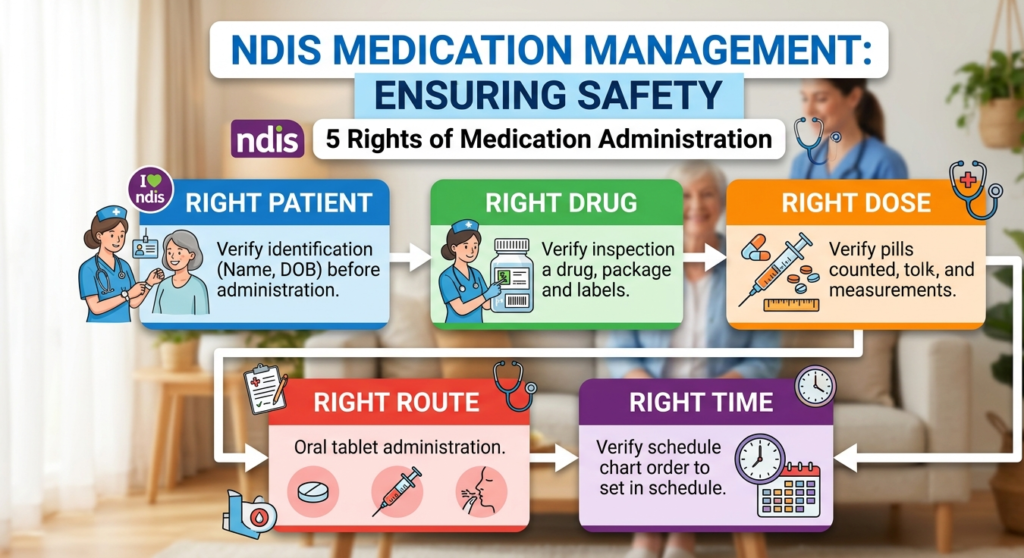
| Dose Accuracy | Follows the 5 rights (Right patient, Drug, Dose, Route, Time). |
| Allergy Check | Regular checks of any rashes or breathing difficulties. |
| Storage | Maintaining the proper temperature of medications (such as insulin). |
| Communication | Immediate update of GP and Carers for Care team. |
Support Worker vs. The Registered Nurse
Can NDIS support workers give meds? Yes, but only if they have certain NDIS medication training. For complex care, however, a registered nurse rn must be in charge of the plan. Support workers typically help with the reminding, and RNs with the taking of high-risk drugs.
There are many people who seek assistance who are looking for an rn agency. that to help them to find an travel registered nurse or a certified registered nurse who has a disability specialty. This ensures the highest level of safety in nursing.
Working Together for Better Health
Safety isn’t the responsibility of just one person. It includes the participant, their family, and their nursing team. Nurses ensure that each step is legal and safe by following the NDIS Medication Management Framework.
Are you confused with scripts and schedules? You don’t have to hesitate to seek a professional review. You can contact our team to learn how we can make your life easier with a dedicated nurse.
Frequently Asked Questions (FAQs)
What is the role of the nurse in ensuring safe medication administration?
The registered nurse performs clinical assessments, checks for drug interactions, and follows the “five rights” to ensure safety and prevent errors during NDIS medication management.
How do you ensure patient safety when administering medication?
Nurses ensure safety by verifying the doctor’s orders, checking the participant’s identity, monitoring for side effects, and keeping accurate records in the NDIS community nursing care plan.
What is complex care in mental health?
Complex care is the care of a person who has more than one mental health problem and more than one physical health problem. That needs to be managed by a registered nurse rn safely with several different health interventions.
What is complex needs in adults?
Complex needs mean an adult has a mix of disabilities or illnesses. This makes NDIS medication management much harder, requiring a pro like an rn to help.
What is medication management?
Medication management is the professional care of a person’s medicines. To ensure they are taken as prescribed to promote health and ensure safety in all care settings.
A Safer Way Forward
Participants can relax and live their lives. Because they know that a registered nurse is looking at the charts and keeping an eye out for risks. The result is the same: health, stability, and safety. Whether you’re dealing with an emergency room nurse after a hospital stay, or a travel rn at your home.
Take care of your health and try not to take chances. If necessary, contact experts who know the details of complex care plans.