


The word assessment usually sounds like a stressful exam or a mountain of paperwork you didn’t ask for. Then, do we need to use appraisal rather than assessment? The answer is No. Ok, now let’s get seriously involved in it. In this case, an NDIS nursing assessment is really your best friend.
It is a face-to-face appointment, during which a registered nurse examines your clinical needs. It will make sure you get the right health support in your NDIS plan. It is not merely a check-up by the doctor. It is one of the means to demonstrate to the NDIS that you require professional nursing services to remain healthy and safe at home.
I will take you through this guide to see the fact when the nurse knocks on your door. So you can feel prepared, relaxed and ready to get the support you planned.
Why Do You Need an NDIS Nursing Assessment?
When your health needs are complex, a normal support worker may not suffice. You may require a person who is medically trained to do things such as wound care, catheter management, or injections.
So, a registered nurse comes to your place to look at your health conditions. They will assess where nursing care can take the pressure off you or your family. This assessment is the key to getting community nursing services funded through your NDIS plan.
During the visit, the nurse will talk to you about your health conditions and check your daily routines. Finally, they will write a report that helps fund your community nursing services. The main goal of this assessment is to help you stay out of the hospital. With the community nursing support, you can manage your health conditions requiring expert care.
Key Reasons for the Assessment:
- You can identify avoidable hospital admissions.
- See if you need help with daily living tasks that are medical in nature.
- You can create a community nursing comprehensive care plan.
The Step-by-Step Process of an NDIS Nursing Assessment
It’s normal to feel a bit nervous when a health professional comes to your home. But it is a pretty easy conversation, all right. This is how it typically goes down.
1. The Initial Chat
The nurse will start by asking about your history. They want to know about your health conditions and how they impact your life. They are obviously not there to judge your house or your lifestyle. They simply want to know where the gaps in your support are.
2. Checking Your Physical Health
Depending on your needs, the nurse might do some basic checks. This could include:
- Checking blood pressure or blood sugar.
- Looking at skin integrity or wounds.
- Check your drug management habits.
3. Overview of Daily Living Tasks.
The nurse will examine the way you manage your daily living tasks. Are you able to handle your own clinical needs or is it necessary to have a professional intervene? They consider things such as feeding tubes, respiratory care, or complex bowel care.
4. Creating the Recommendation
The nurse prepares a big report after the visit. This is the “golden ticket” for your NDIS plan. It tells you precisely why you need clinical care to achieve your independence.
Nursing Assessment Components: At a Glance
| Area of Focus | What the Nurse Looks For |
| Clinical Care | Wound care, injections, or PEG feeding needs. |
| Medication Management | How you take your meds and if you need help. |
| Continence | If you need specialized products or catheter care. |
| Risk Assessment | Identifying things that could cause avoidable hospital admissions. |
How Community Nursing Services Differ from Support Workers
I often get asked, “Can’t my support worker just do this?” Well, the simple answer to this is no. While support workers are amazing for helping with showers or going to the shops, they aren’t trained for clinical care.
NDIS community nursing is an activity that involves Registered Nurses (RNs) or Enrolled Nurses (ENs). They have the medical license to perform procedures that keep you stable. If your health needs involve high-risk tasks, the NDIS prefers a nurse to oversee your management to ensure safety. You can learn more about finding the right team on the Carers for Care.
Preparing for Your Assessment Visit
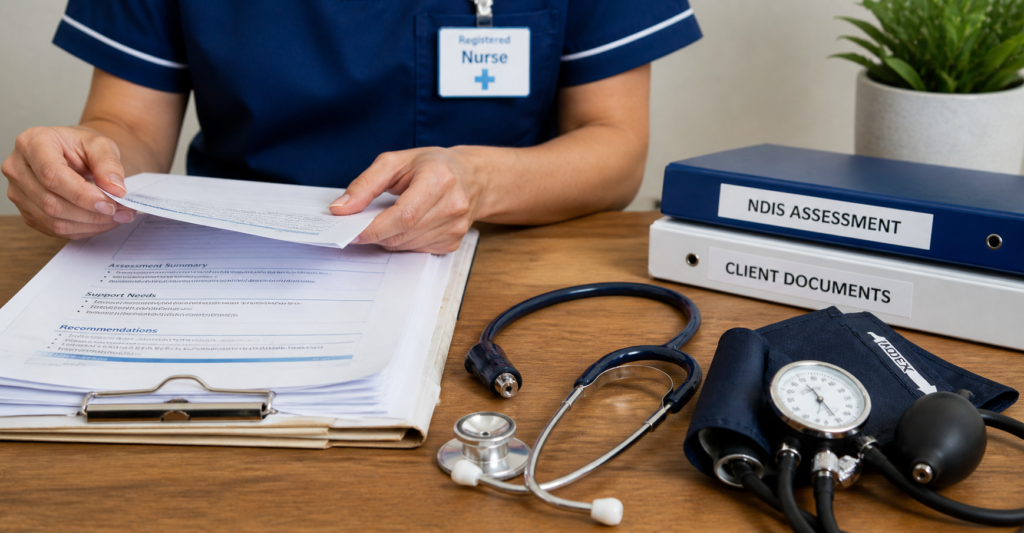
To make the most of your NDIS nursing assessment, it helps to be ready. You don’t need to do a big spring clean, but having your paperwork handy is great.
- Have your current NDIS plan ready: The nurse needs to see what’s already funded.
- List your medications: A simple list from your chemist is perfect.
- Consider your bad days: Don’t simply discuss when you feel good. The NDIS must be aware of what you require when times are hard.
- Invite a friend: If you feel more comfortable, have a family member or a support coordinator there with you.
How is Community Nursing Funded Through Your NDIS Plan?
Funding usually comes out of your Capacity Building or Core Supports budget. The NDIS will look at the nurse’s report to decide how many hours of nursing services you get each week.
In case your needs change, such as when you have just returned home after an operation. You may need a snap NDIS nursing assessment to increase your hours. It’s all about making sure the community support grows with you. When you are getting confused with the paperwork, you can find extra information. Also, you can meet the Australian healthcare standards by checking out such resources as the Department of Health.
Getting the Right Support for Your Journey
An NDIS nursing assessment is one of the tools that can be used to give you a better life at the end of the day. It is about ensuring that you have the professional health team that you deserve in order to focus on living and not just managing a condition.
You just need to find a team that will treat you like an individual and not a number. Then, contact local providers who specialize in complex care. A trusted community nursing team will ensure your safety at home and save you those stressful visits to the hospital. If you’re ready to get started, feel free to contact us to chat about your needs. Keep in mind, your health and your ndis goals go hand-in-hand!
Frequently Asked Questions (FAQ)
What are the 4 stages of nursing assessment?
The four phases include assessment (data collection), planning (goal setting), implementation (commencement of the nursing care), and evaluation (determining whether the clinical care is actually working on the participant).
How to prepare for a NDIS meeting?
- Collect all medical records
- Describe your health conditions
- Determine which daily living activities you need a nurse.
Evidence is clear and it can be used to secure community nursing services in your ndis plan.
What are the 5 assessment tools?
The most common tools are the Waterlow scale for skin, pain scales, bowel charts, medication reviews, and mobility tests. These help create a community nursing comprehensive report for the ndis.
What are the 13 areas of assessment in nursing?
These include health perception, nutrition, elimination, activity, sleep, cognitive patterns, self-perception, roles, sexuality, coping, values, and physical safety. They cover all health needs for ndis community support.
What are the ABCs of nursing assessment?
The ABCs are Airway, Breathing, and Circulation. This is a critical clinical care priority that will guarantee life-saving nursing assessment and immediate support to NIDS community patients.