

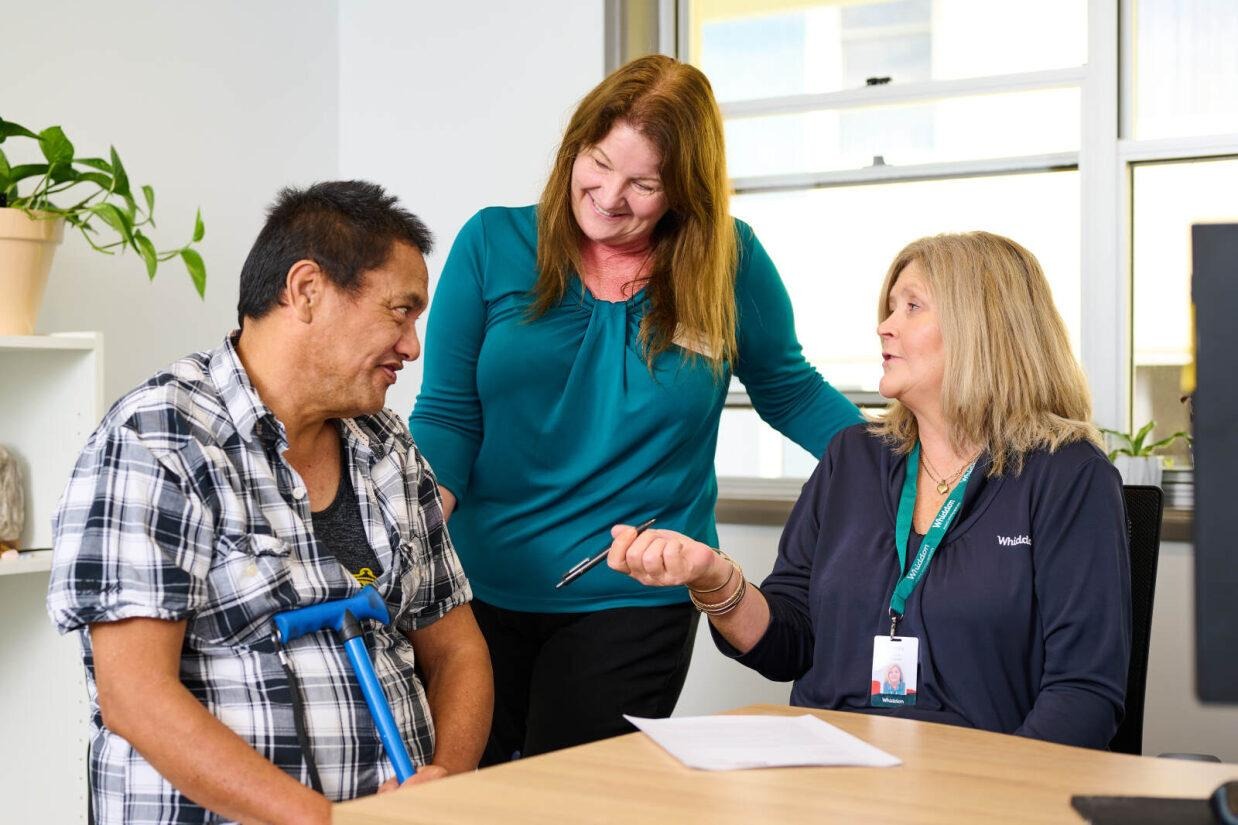
The easiest method for Australians to apply for NDIS funding is to check if one is eligible, submit the official NDIS Access Request Form, and medical reports. It describes what kind of day-to-day support an NDIS participant might require.
The problem is that the system may seem confusing at first. Frankly speaking, government procedures are not always clear. Hence, many Australians do not know where to start. You think you’re chasing your tail.
But the rewards after the NDIS agreement signing are life-changing. Here, the Carers for Care team will show you the way out and make your click painless. We shall then guide you through a step-by-step, clear, easy-to-follow path on how to apply for NDIS funding.
What Is the NDIS?
The National Disability Insurance Scheme (NDIS) is a national scheme that is funded by the Australian government to assist individuals with permanent disabilities. Lightly, NDIS is a means of assisting Australians experiencing a long-term and severe disability. This assistance will be able to enhance skills and independence in the long run. NDIS is used to fund services that assist NDIS participants.
The program is managed by the National Disability Insurance Agency (NDIA). They review applications, manage plans of participants, and distribute funding. The entire idea of the NDIS is to develop a personal plan that suits your personal objectives and situations.
Who Is Eligible for NDIS in South Australia?
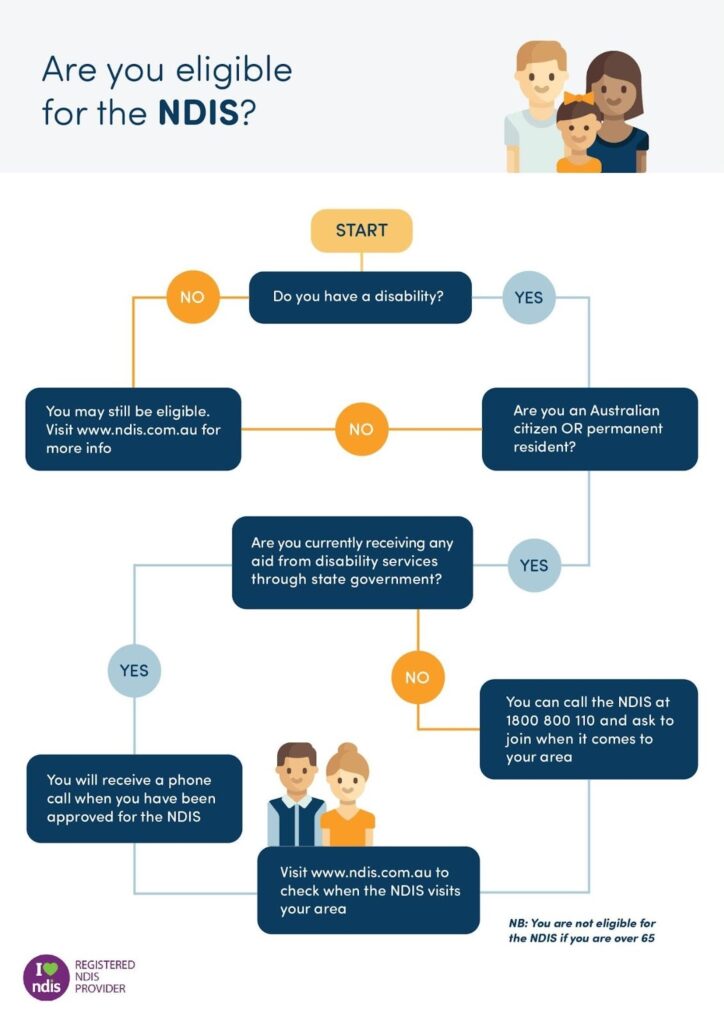
You must first find out whether you qualify before you even consider forms. This is like checking whether you fit the entry requirements of a club! The following are key points to be considered:
1. Age Requirement
During the application time Applicants age should be between 7 and 65. There are various procedures for children below the age of 7, although in many cases, the Early Childhood Early Intervention is used.
2. Residency Requirements
Do you live in Australia? To qualify, the answer must begin with yes. Applicants to NDIS need to be an Australian citizen, permanent resident, or a Protected Special Category Visa holder.
3. Have a Permanent Disability
Do you have a long-term condition that causes you difficulty in performing daily activities without help? This implies you’re living with your disability. That complicates your activities such as interaction, moving around, or even taking care of yourself.
4. Needs support for Daily Living
NDIS does not simply require a diagnosis. All they have to understand is how your disability stops you from doing ordinary things. This is referred to as Substantially Reduced Functional Capacity.
- Mobility: Are you able to move freely in your house?
- Communication: Are you able to be understood or do you understand what they are saying?
- Learning: Are you able to memorize facts?
- Self-care: Are you able to shower, dress, or eat independently?
- Social Interaction: Does the person behave properly in public?
- Self-management: Are you able to plan your day?
In case these requirements are relevant to your case, then you might be able to submit an application to receive NDIS assistance. To get more information, you must always refer to the source. The NDIS site has an Eligibility Checker, which is easy to use and can provide you with a better idea.
Steps to Apply for NDIS Funding
Once you have checked eligibility, if you are aware that you are eligible for it. The first thing is to apply to NDIS. Through this step-by-step guide, you are sure to complete your NDIS application form and contact the NDIA. The application of the National Disability Insurance Scheme follows some steps.
Step 1: Gathering Evidence
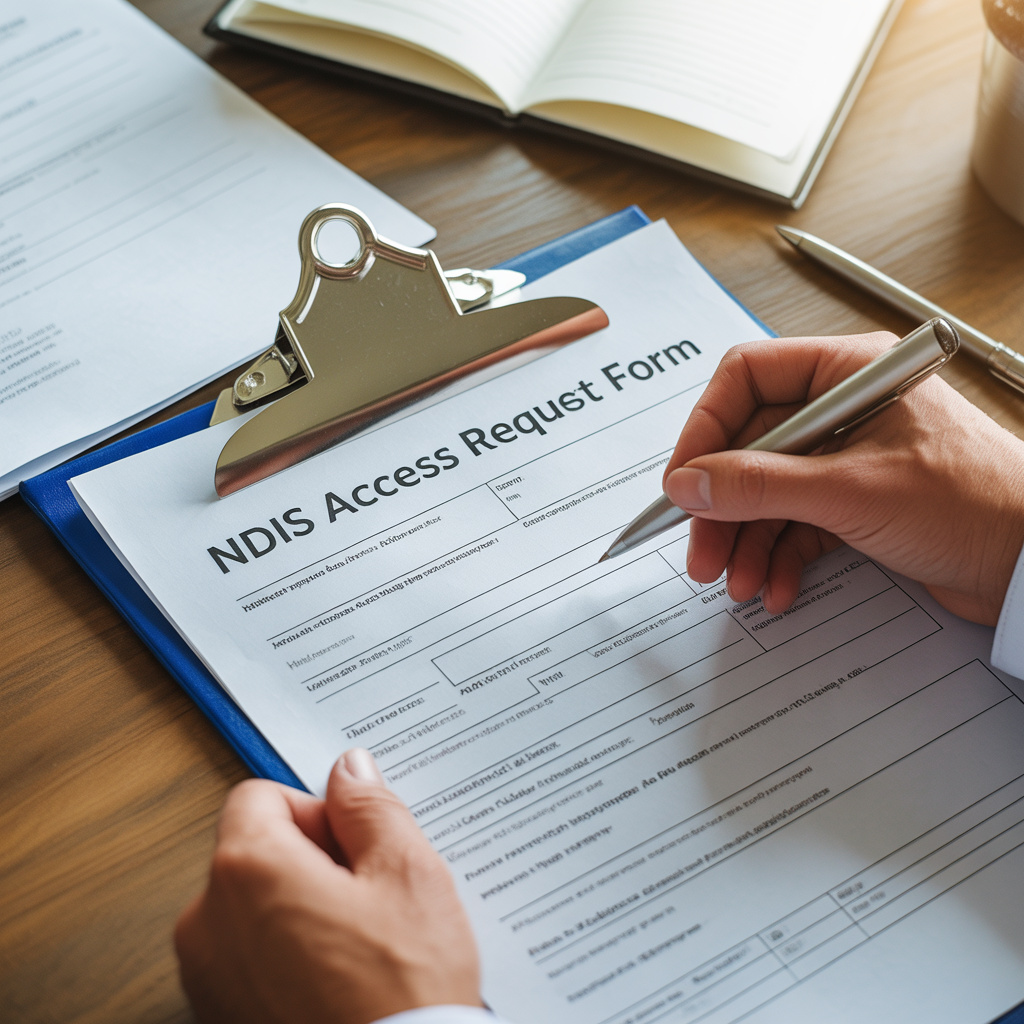
The Access Request Form (ARF) is a key paper in the NDIS application. This shape gathers valuable personal and functional impact data. The NDIS must know how your disability is affecting your life.
The data that might be included in the form is usually:
- Individual information (Medicare card and birth certificate)
- Contact information
- Occupational Therapist (OT) or Physio medical history.
- Functional limitations
- Support needs
Applicants might require the help of healthcare professionals to accurately fill out this form.
Step 2: Complete the Access Request Form
This is your official ticket of admission. You must fill in this form with your personal details and place of residence. Here is a Registered Supporter who can assist you in case a participant is incapable of doing it on their own. This is somebody who will assist you in making decisions and negotiating with the NDIS on your behalf. And NDIS applicants just have to confirm that the paperwork doesn’t gather dust. Get the Access Request Form on the official NDIS website and schedule a long appointment with your GP this week to get it started!
Step 3: Place an Access Request
In order to finalize the application process, you must provide an NDIS application form. This request informs the National Disability Insurance Agency that you would like to receive NDIS funding support.
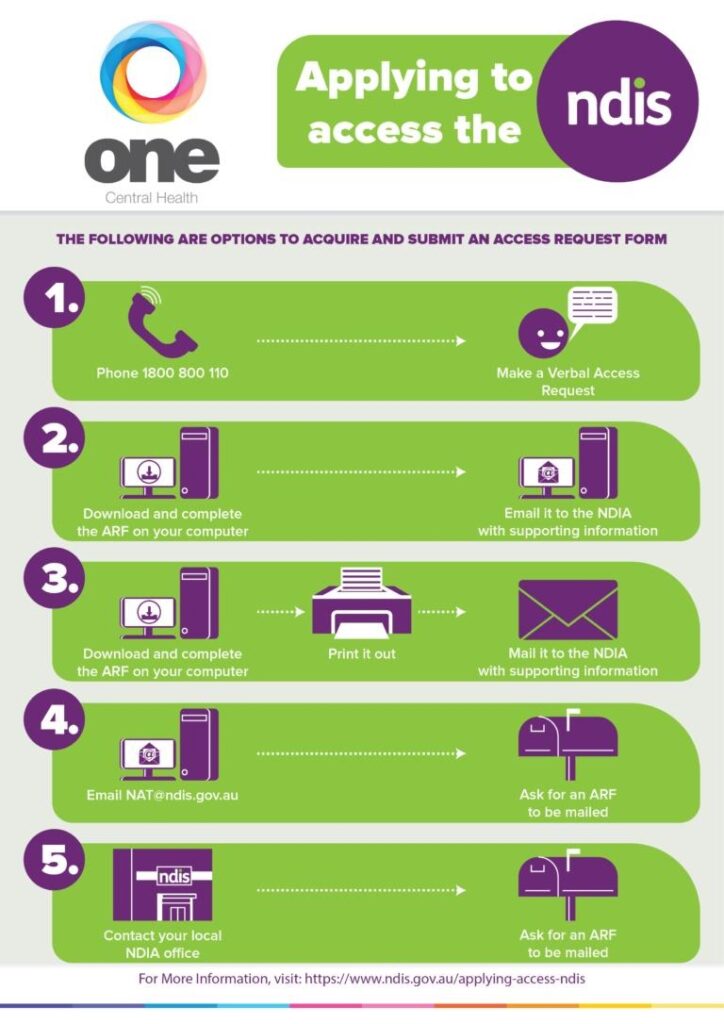
You can submit by-
- To make an offline assessment request, call 1800 800 110.
- Download the NDIS application form PDF and send an Access Request Form (ARF) in an online manner.
- Going to the office of a Local Area Coordinator (LAC) in SA to seek face-to-face assistance.
Step 4: NDIA Reviews Your Application
After you have sent your form either through email to enquiries@ndis.gov.au or in person at an SA office, the NDIA will go through it.
- Time: NDIS has 21 days to review appliances. During this period, they will tell you whether your application is successful or not.
- The Assessment: An assessor may make a call or visit to inquire further about your needs and goals in daily life.
In case of the time expiry, you might be allowed to apply to extend your time to make your application using this online form. In other instances, this review can take weeks, based on the complexity of the application.
Step 5: Receive Your Application Decision
NDIA will inform you whether your NDIS application is approved or not after reviewing it. Possible results include:
- NDIS Application approved: You are an NDIS participant.
- Require more info: Additional needs to be included.
- Application declined -Eligibility criteria were not met.
Provided that it is approved, the second step is to make your own NDIS plan. However, in case the NDIS application form check outcome was negative, you are allowed to seek one more review. The review of decisions made by the National Disability Insurance Scheme does not require the NDIS registration cost.
| Result | What it Means |
| Approved | You are now a participant! Time to start planning. |
| More Info Needed | They need a bit more detail from your doctor. |
| Declined | You didn’t meet the criteria this time. You can ask for a review. |
Tips for a Successful NDIS Application
Who would not like to increase their chances of approval, right? To ensure that there is a high success rate, submit very specific medical reports with clear information about the functional effect of your disability. It is also necessary to narrate about your daily challenges. An example is the impact of your condition on such activities as mobility, communication, and self-care.
You may also think about getting professional help from the support coordinators or disability advocates to polish your application. You must retain documentation of any kind that might require future use. Make sure that you are ready in case the NDIA wants further information.
FAQs
Is scoliosis a disability in NDIS?
Yes, but only on a permanent, substantial basis. To be eligible, one should demonstrate that his/her scoliosis (or treatment) has a significant impact on his/her ability to perform everyday activities.
How much is disability payment in South Australia?
Centrelink pays the Disability Support Pension (DSP) twice a fortnight. By early 2026, the rate for one individual is expected to be about 1178.70 dollars per fortnight, depending on your age and assets.
Does NDIS give you money in Australia?
No, NDIS does not give out cash or income. It offers a subsidy on certain supports (such as carers, equipment, or therapy). This money is given directly to providers or reimburses you for pre-approved expenses.
Can I get NDIS for mental health?
Yes. This is referred to as a psychosocial disability. You may be eligible if your mental health condition is long-lasting and is severely affecting your capacity to cope with daily living, job and social circumstances.
What conditions automatically qualify you for disability in Australia?
List A NDIS includes conditions that have probably met requirements imminently and these include:
- Autism (Level 2 and 3)
- Cerebral Palsy, Down Syndrome, Intellectual Disability.
- Permanent Deafness or Blindness, permanent Spinal Cord Injuries.
Final Thoughts
The NDIS process in South Australia is ordered and starts with the process of eligibility check and filing of an Access Request Form. You can apply for NDIS funding now with ease for the support you will require by following these steps. Now, to have your NDIS services, you just need to click for NDIS application form PDF.