


When a family member has a physical problem and starts to experience difficulties in his/her daily living. It’s high time to find the necessary support. Even such a simple daily routine as bathing, dressing up, or making meals might become challenging overnight.
The National Disability Insurance Scheme (NDIS) in Australia provides a wide range of disability supports, including NDIS personal care services. These enable participants to overcome the most important activities of daily living (ADLs) and remain dignified, independent, and active.
Although you may have heard of NDIS health care. There is often confusion about services and how NDIS personal care services support daily living and freedom. This is a guide by Carers for Care, which represents everything in detail and provides examples to understand why NDIS services are helpful for the daily routine of a participant.
What is NDIS personal care?
NDIS personal care refers to the support provided to people in their daily lives to enable them to stay healthy. Moreover can take care of themselves, groom, keep clean, secure themselves, and generally become independent. These services, offered under the NDIS, are often delivered as in-home care services by trained support workers. They are committed to learning the unique needs of each participant.
However, personal care is not merely a physical aid. It is a structure of a supportive and trusting relationship. A competent health care provider not only assists you with your basic tasks. They also honor your dignity, choice, and autonomy. The organization of assistance helps participants gain power, creating confidence, encouraging independence, and safety. Also, creates a true bond that makes everyday life more comfortable and satisfying.
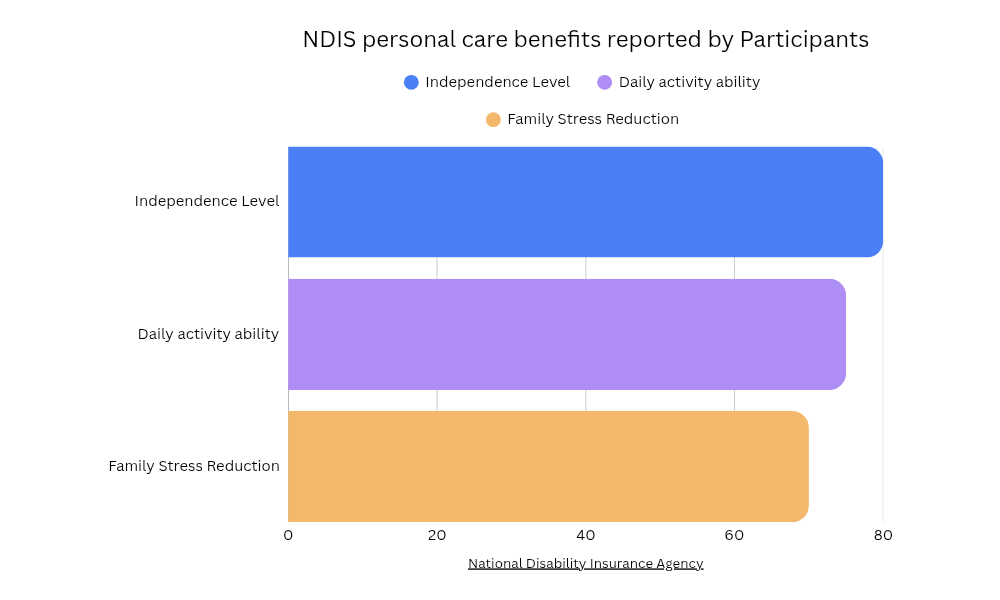
How NDIS Personal Care Changes Lives: The Value of Professional Support
At Carers for Care, we provide the Australian NDIS Insurance scheme to ensure bespoke services that feel natural and respectful. We understand that no two participants are the same, so our NDIS carers prioritize your specific likes, dislikes, and cultural needs. For-
Gaining Back Independence, Esteem, and Confidence
As soon as people are treated with respect and help in personal activities, they do not feel alone anymore. Instead, they discover a sense of emotional attachment in which they have similar goals and also similar day-to-day activities. The support with daily living skills, such as dressing, allows the participants not to be ashamed or disappointed about their decisions. They have the psychological room to think without any interference and keep their hygiene, which greatly improves their quality of life.
Encouraging Safety and Security
Qualified NDIS assistants do not simply work on behalf of a participant. They assist the participant in doing things on his or her behalf. This helps them to establish a routine that makes each day more predictable. Whether it is provided through home health agencies or by independent workers. Since they follow a routine on a day-to-day basis. This predictability is particularly useful to people with neurological or developmental problems. Through this stability, personal care enhances sleep patterns, physical comfort, and emotional balance.
Promoting Reasonable and Reliable Relations
A lot of people think that support workers are just the ones who carry out physical work. However, an exceptional worker is aware of your ideologies and cares for you. This creates a basis of mutual trust and dependency as the bonds of relationships are strengthened. This connection improves the psychological well-being and gives a feeling of relaxation. The heavy workload of day-to-day activities is taken off these workers, hence giving participants time and energy to socialize and interact with their families, thereby enhancing community inclusion in Australia.
Liberty to Concentrate on What is important.
When the day is full of physical struggles, there is no time to do anything except what is necessary to do. When the complicated morning routines that are complicated are relieved by putting them on the personal care assistant. The participants will be able to focus their mental efforts on work, study, or a hobby. They are then able to adopt a lifestyle of being relaxed and having their own interests and passions without having to worry about taking care of the house every day.
Relaxation of Loved Ones.
NDIS personal care offers an enormous opportunity for family care. By handing over the specialized care tasks to professionals, the family members and primary caregivers usually get relieved of their duties. They are able to once again revert to the status of family. This gives the opportunity to spend quality time and have deeper emotional bonds in the house.
Individualized Services to Your Requirements.
There is no perfect match between two participants. NDIS would design plans that would not interfere with personal tastes and cultures. A primary care provider or a specialized support worker will never overlook your peculiarities, preferences, and dislikes. So that all details of assistance will suit your own preferences absolutely.
Gaining Empowerment
Instead of just doing everything on behalf of the participants. The support workers promote the involvement of the participants in the daily activities and community life. The more a participant takes control of his/her care, the more their self-belief increases. Such minor accomplishments as personal hygiene or routine develop the daily living skills and trustworthiness to be really strong day by day.
Independence and Its Effect on Mental Resilience
To a large number of NDIS members, depending on others due to basic needs may damage self-esteem. The balance of this is done in NDIS personal care services. When people keep themselves in control of their personal routine, they become more in control of their lives. The feeling of agency also leads to resilience in the mind, and people are able to handle the challenges of life a lot better.
What Personal Care Services Include
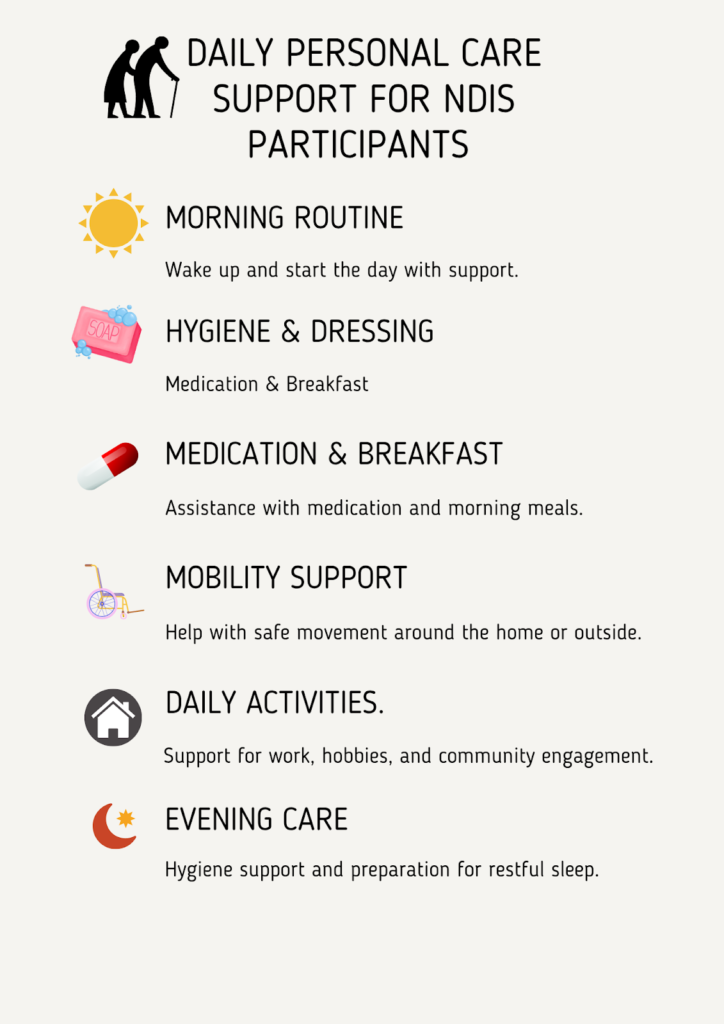
NDIS personal care services provide essential assistance with daily tasks while actively encouraging independence and safety. These supports are tailored to match each participant’s unique routine, ensuring they feel comfortable and confident in their everyday lives.
Hygiene and Personal Grooming
Personal hygiene is important to personal comfort and confidence. Some of the tasks which are facilitated by support workers include bathing, teeth brushing, hair, and shaving. This assistance will guarantee that the participants are able to sustain their health and self-esteem physically by their clean and comfortable appearance.
Dressing and Activity Assistance
A support worker may not always pick your style, but he/she is available to assist you to be properly dressed, safely and effectively. This support assists NDIS participants to have a well-planned beginning of their day, giving them the balance to approach the day with favorable confidence.
Mobility, Transfers and In-Bed Support
People are careful about their safety at home. In-bed mobility is supported by assisting with turning or position changes to avoid health hazards, and aided by transfer between surfaces (between beds, wheelchairs, or chairs) to promote complete stability.
Toileting and Continence Management
Personal care refers to respectful/private toileting and continence aid. Offering such support in a dignified way will make sure that the participant remains hygienic, comfortable and healthy.
Nutrition and Hydration Support
Well-being depends on a good diet. The support workers will be able to help plan and prepare healthy meals that take into account certain health conditions. They also make sure that the participants remain well hydrated and that they get the required support during mealtimes.
Body Positioning/Comfort Assistance
Female NDIS participants who do not move freely can be assisted by support workers to sit or lie in comfortable and safe positions of the body. Effective positioning will be essential in alleviating physical pain and avoiding pressure ulcers.
Medication Control and Reminders
A support worker will give the required cues to make sure that medication is taken on time. There, they need physical assistance, e.g., opening hard-to-open pill containers or ointments, monitoring and reporting health or behavior changes to your healthcare provider.
Physical Activity and Mobility Support
In some cases, being an active participant, they can require qualified assistance. Here, the support workers can help them with simple physical activities. They can assist with mobility enhancement by offering physical help when stretching, walking, or performing strength activities. Moreover, they help to reduce the risk of falls.
FAQ
1. Is personal care an everyday activity funded by NDIS?
Yes. If the assistance is considered reasonable and necessary to support improved daily living NDIS goals. The NDIS can finance daily help based on the participant’s specific needs.
2. Do NDIS people select their own personal care support worker?
Absolutely. Participants and their families have the flexibility to select an in-home care services provider or worker. With whom they feel comfortable and friendly.
3. Are lifetime personal care assistants sustainable?
NDIS support is designed to change. The participant’s plan can be checked and changed. Because the life of a person is bound to evolve. For this, they make sure that the support is working for the individual. It is much more personalized than standard nursing home activities, focusing on your specific lifestyle and freedom.
4. What if my needs change?
Users can check the review of the NDIS plan at any time. This is because services can be adjusted to suit new objectives, affordable health care, or lifestyle changes.
Final Word
Personalized care is one of the most effective methods of ensuring a high quality of life. While disability inclusion is one of the focuses of the Australian government, it is progressing towards this goal. Such NDIS personal care services make sure people with disabilities can traverse the world with a respectable sense of freedom. They can gain confidence by helping them with their daily tasks. Are you willing to regain freedom? So, it’s high time to contact Care for Care for a free consultation for more updates!