


You can get between $1,784 and $3,456 per year in NDIS transport funding. Using public transport can feel difficult or impossible for you because of your health issues. As a solution, the National Disability Insurance Scheme (NDIS) splits this money. It will be split into 3 categories based on how often you travel for work, study, or community access.
This allowance is paid directly to you or managed in your plan. Fortunately, knowledge of your options makes all the difference. Let’s break down exactly how these funding levels work and how you can get a higher payment according to your needs.
What is NDIS Transport Funding?
To minimise the extra costs of travelling, NDIA built transport funding into the NDIS plan. They understand your difficulty using public transport. So they ensure that your disability can’t stop you from enjoying yourself independently. It sits within your NDIS support budget, specifically under your Core Supports.
The NDIS breaks transport down into a few different buckets-
- Participant Transport Allowance: This is a fixed, regular financial amount directly paid to you. Otherwise, they can pay your manager for daily expenses like taxis, rideshares, or community shuttle fees.
- Provider Travel: This pays for a support worker or therapist. For their time to travel to your house to deliver a service.
- Activity-Based Transport: This happens when a support worker drives you around. During a session, like taking you to the grocery store or a local footy match, activity-based transport costs. The worker bills for their time, plus a per-kilometre rate.
You can partner with a trusted ndis transport provider and get rid of the guesswork in your weekly travel plans.
The Three NDIS Transport Funding Levels Explained
The NDIS allocates funding levels based on participants’ regular weekly routine and goals. National Disability Insurance Scheme reviews these funding rates on a regular basis.
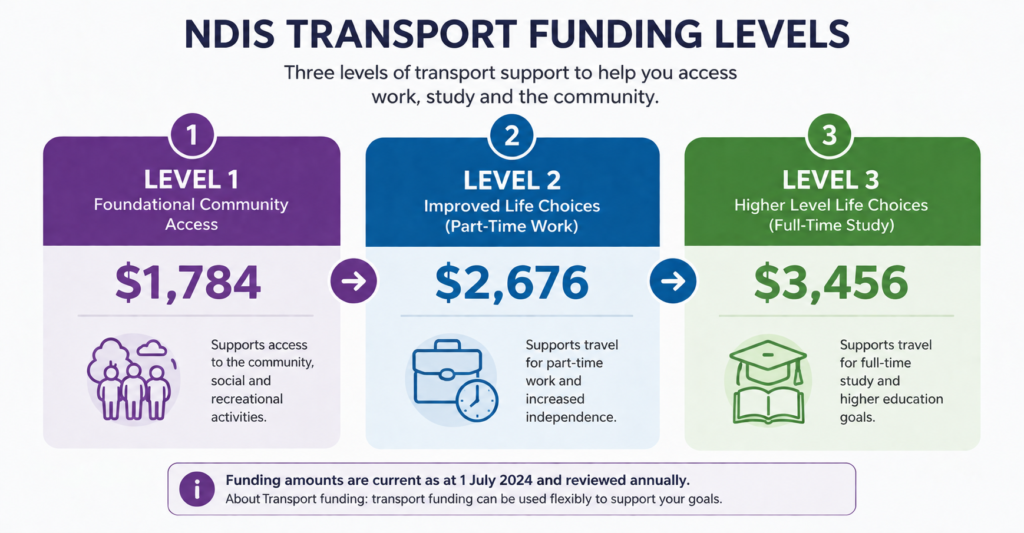
Level 1: Community Access
- Funding Amount: $1,784 per year and approximately $69 per fortnight.
- Who it’s for: Participants who want to get out into the community, do volunteer work, or improve their social connections.
Level 2: Part-Time Work, Study, and Day Programs
- Funding Amount: $2,676 per year and approximately $103 per fortnight.
- Who it’s for: Participants who are currently working or studying part-time, regularly attending day programs, or participating in community-based leisure and social activities.
Level 3: Full-Time Work or Higher Education
- Funding Amount: $3,456 per year and approximately $133 per fortnight.
- Who it’s for: Level 3 is for participants who are working, looking for work, or studying for at least 15 hours a week.
This table will help you understand how these categories line up to see where you fit:
| Funding Level | Annual Allowance (2026) | Fortnightly Payment | Main Target Audience |
| Level 1 | $1,784 | ~$69 | Occasional social outings & volunteering |
| Level 2 | $2,676 | ~$103 | Part-time work/study (under 15 hrs) or day programs |
| Level 3 | $3,456 | ~$133 | Full-time work, study, or job seeking (15+ hrs) |
Exceptional Circumstances: In very rare cases, if you live in a highly remote area or have complex needs that require massive transport outlays for work. The NDIA may approve an amount higher than Level 3. It needs additional files and specialized quotes.
How is NDIS Transport Funding Paid?
The way you receive and manage your transport funding fully depends on your overall plan structure.
Self-Managed NDIS Plans
For a self managed ndis plan, the NDIA generally pays recurring transport costs directly into your bank account every fortnight. You do not need to upload individual receipts for every taxi ride or Uber ride. But you must keep a basic record of your travel costs for further auditing.
Plan-Managed NDIS Plans
For a plan managed ndis setup, the funding doesn’t go straight to your personal bank account. Instead, you or your transport providers send the invoices directly to your Plan Manager. Then he pays them from your allocated budget line items. This means it’s very organized without adding to the chore of paperwork.
NDIA-Managed Plans
When it is agency-managed, you must use registered NDIS providers. The provider will claim their service costs directly from the NDIS portal. Besides, they will assist you with your travel needs. You can read up NDIS funding for transport solutions to get a clearer picture of how to structure your next plan meeting.
What is Covered and What is Not?
You can legally spend your money to protect you from compliance issues down the track.
- What IS Covered: Taxis, rideshare options, community transport shuttles, specialized accessible vehicle hire, and, in some cases, private vehicle running costs. But it must be directly linked to achieving your plan’s goals.
- What IS NOT Covered: Travel costs for your family members, friends, or informal carers. It also will not cover normal transport costs like getting a personal car or normal car registration.
Tips to Maximise Your NDIS Transport Budget
A couple of taxi rides a week can quickly add up to more than $3,000 a year. You will need to stretch your NDIS transport budget.
- Double Up with State Taxi Subsidies: Each Australian state has a taxi subsidy program. They usually cover up to 50% or 75% of your costs. You can use your NDIS funds to adjust your budget, so it lasts twice as long!
- Compare Rideshare vs. Taxis: Standard rideshare apps can often be significantly cheaper than traditional taxis for non-wheelchair journeys. You can monitor fare costs during busy times and save money.
- Schedule Your Trips: Try booking your medical appointments, shopping runs, and social visits all in one day. If they are in the same neighborhood. This reduces empty return journey costs.
You don’t have to wait until your plan expires if your life changes. You can request an immediate plan reassessment to move up to a higher tier. For personalized advice, an experienced team for dedicated ndis support can help get your plan back on track.
Frequently Asked Questions (FAQs)
What is the highest disability payment?
In Australia, the highest direct income support is the Disability Support Pension (DSP). This is separate from NDIS funding. That covers functional equipment, therapies, and everyday care supports rather than cash living payments.
Can NDIS core funding be used for transport?
Yes, NDIS transport funding sits directly within your flexible Core Supports budget. It will allow you to pay providers or claim for specialized disability travel needs.
What is 2:1 in NDIS?
A 2:1 ratio means an NDIS participant requires two support workers at the same time. They safely assist participants with a specific activity, community outing, or complex personal care routine.
How is NDIS transport funding paid in Australia?
It is paid either as a fortnightly direct deposit to self-managed participants or handled via invoices. That is processed by your Plan Manager or the NDIA, depending on your overall budget.
Conclusion
The right amount of NDIS transport funding ensures you can join work, study, or social connections. With that support, you can maintain your independence effortlessly. If your current budget isn’t proper, then speak with your Support Coordinator to upgrade your next plan review.