


Medication is an important part of daily health and wellbeing for many NDIS participants. Some people have a simple routine, while others may take multiple medicines, use Webster-paks or blister packs, need monitoring, or require help from trained workers.
This is where NDIS medication management becomes important. Safe medication support helps participants take the right medicine at the right time, follow their routine, reduce missed doses and avoid medication-related concerns.
A common question families and participants ask is: can a support worker help someone take medication?
The answer depends on the participant’s care plan, provider responsibilities, training requirements, medication type and the level of care needed.
What Is NDIS Medication Management?
NDIS medication management means helping participants manage their medicines safely when it is connected to their disability support needs and daily routine.
This may include:
- Medication reminders and prompts
- Help with Webster-paks or blister packs
- Medication administration support
- Monitoring for missed doses or side effects
- Keeping clear records
- Following a medication plan
- Reporting concerns to a nurse, GP, pharmacist or support coordinator
Medication management is not only about giving medicine. It also includes planning, documentation, monitoring and making sure everyone involved understands the participant’s needs.
What Support Workers Can Do
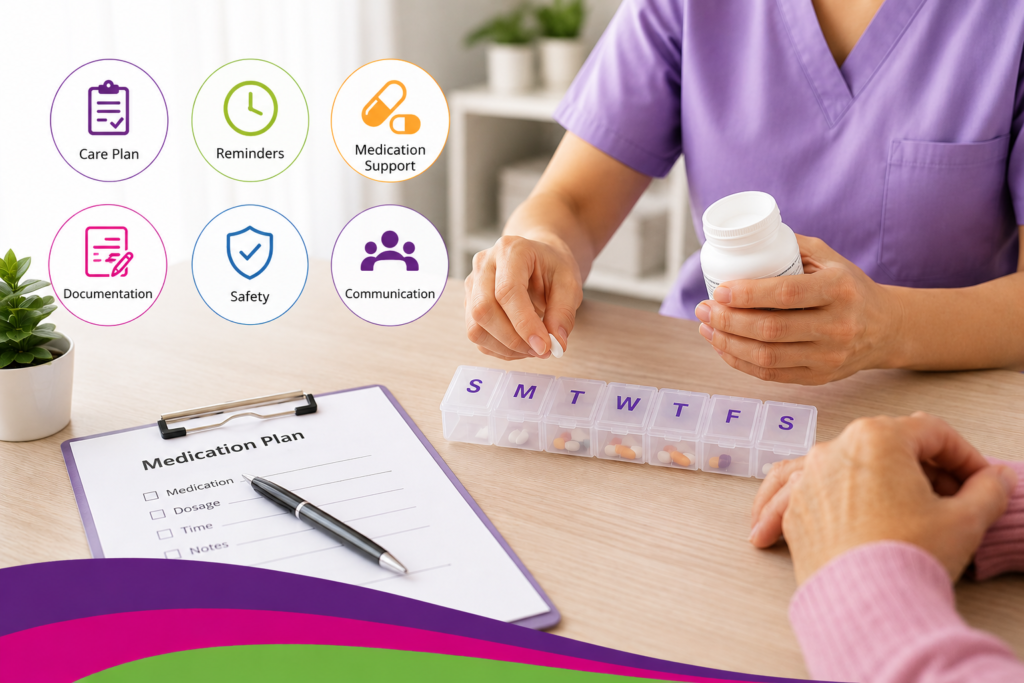
Support workers may provide medication support when it is clearly included in the participant’s care plan and they have received the right instructions, training and guidance.
They may help with:
- Reminding a participant to take medicine
- Prompting medicine at the correct time
- Helping with Webster-paks or blister packs
- Supporting the participant’s daily routine
- Recording when support was provided
- Observing and reporting concerns
- Following written care plan instructions
- Escalating issues when needed
For example, if a participant’s plan includes help with a dose administration aid at an agreed time, a trained worker may assist according to the plan and provider procedure.
What Support Workers Can’t Do
Support workers should not make clinical decisions about medicine unless they are qualified and authorised to do so.
In general, they should not:
- Change medication dosage
- Decide when medicine should start or stop
- Give medicine that is not listed in the care plan
- Ignore missed doses, side effects or errors
- Give medicine without proper instructions
- Replace the role of a nurse, doctor or pharmacist
- Provide complex care without training or clinical guidance
- Make decisions about medication interactions or medical symptoms
Medication decisions should always involve the right health professional, such as a GP, pharmacist or registered nurse.
Medication Administration vs Medication Support
| Topic | Medication Support | Medication Administration |
| Meaning | Helping a participant follow their medication routine safely. | Directly assisting a participant to take medication according to a care plan or clinical instruction. |
| Common Tasks | Reminders, prompts, routine support, Webster-pak or blister pack support, and reporting concerns. | Helping with medication at the correct time, dose and method as written in the care plan. |
| Level of Risk | Usually lower risk when the participant can manage most of their routine. | May involve higher responsibility, especially when the participant cannot self-manage medication. |
| Who May Provide It | A trained support worker may provide this if it is included in the participant’s support plan. | This depends on the medication type, care plan, provider policy, training and whether nursing guidance is required. |
| Documentation | Records may include reminders, missed doses, refusal, side effects or concerns. | Records should show when medication was administered and any concern, error or follow-up needed. |
Medication support is usually about helping a participant stay on track with their routine, while medication administration involves directly helping them take medication safely and correctly.
When Nurse-Led Support May Be Needed
Some medication routines require more than basic reminders. Nurse-led care may be needed when a participant has complex health needs, higher risks or medication requirements that need clinical oversight.
This may include:
- Multiple medicines with complex timing
- Recent medication changes
- Injection support
- Side effect monitoring
- Support after hospital discharge
- Diabetes-related routines
- Seizure medication needs
- High-risk medicine
- Ongoing health monitoring
- Medication errors or frequent missed doses
A nursing assessment can help identify the right level of care and create a clear support plan.
Why a Medication Support Plan Matters
A medication plan helps everyone understand what needs to happen and how care should be delivered safely.
A good plan may include:
- Medication name and purpose
- Dosage and timing
- Administration instructions
- Storage requirements
- Missed dose process
- Side effect monitoring
- Documentation requirements
- Emergency or escalation steps
- Who to contact if something changes
- Review dates and responsibilities
This helps reduce confusion and supports safer, more consistent care.
Medication Documentation and Safety
Clear documentation is an important part of safe care. Workers should record medication-related support according to provider procedures and the participant’s care plan. Registered providers should also follow the NDIS Practice Standards for safe support delivery and medication management.
Documentation may track:
- Whether medicine was taken
- Missed doses
- Refused medicine
- Side effects or concerns
- Changes in routine
- Communication with family or health professionals
- Incidents or errors
If something does not look right, workers should follow the escalation process and report the concern promptly.
How Carers for Care Can Help
Carers for Care provides medication management and assessment support for NDIS participants across Adelaide and selected areas of South Australia.
Our team can help with:
- Medication assessment
- Support planning
- Medication administration support
- Webster-pak and blister pack support
- Monitoring and documentation
- Nurse-led care
- Coordination with GPs, pharmacists and support coordinators
- Safe and person-centred care planning
We focus on making medication routines safer, clearer and less stressful for participants, families and support teams.
Final Thoughts
NDIS participants may need different levels of help depending on their health needs, daily routine and care plan. Some people only need reminders, while others may need trained support or nurse-led care.
Safe NDIS medication management depends on clear planning, good communication, accurate documentation and the right level of professional support.
If you or someone you support needs help with medication routines, Carers for Care can provide safe, respectful and nurse-led support tailored to individual needs.
Frequently Asked Questions
Can a support worker help with Webster-paks or blister packs?
Yes, a trained support worker may help with Webster-paks or blister packs if it is written in the participant’s care plan and provider instructions.
Can an NDIS support worker remind someone to take medication?
Yes, medication reminders or prompts can be provided when they are part of the participant’s support plan and daily routine.
Who is responsible if a medication error happens?
The support worker should record the issue, follow the provider’s escalation process and report it to the right person, such as a nurse, GP, pharmacist or manager.
When does medication support need a nurse?
Nurse-led support may be needed for complex medication routines, injections, high-risk medication, side effects, recent changes or frequent missed doses.
Can NDIS funding pay for the actual medicine?
Usually, the NDIS does not pay for the medication itself. It may fund medication support when it is related to disability support needs.